R
C
aby
eading
oach
B
Teaching you how to teach your baby to read
Age 1, not Grade 1


Why Teach Your Baby to Read?


So Many Reasons!
Here Are 3 Of Them:


Baby vs. School-Age Reading
Reading can be learned at any age, but the earlier we learn to read, the more easily we learn, and the more we can benefit.

If we teach babies, we are teaching reading at the ideal time.
Learning to read earlier comes much more easily and naturally, and with life-long benefits.

How is learning to read different for babies vs. school-age children?
Learn more below:

If we wait until school-age, we are teaching reading too late.
Learning to read later can be difficult, because our brains are less receptive to language acquisition.
Learning to Read is More Difficult at School-Age
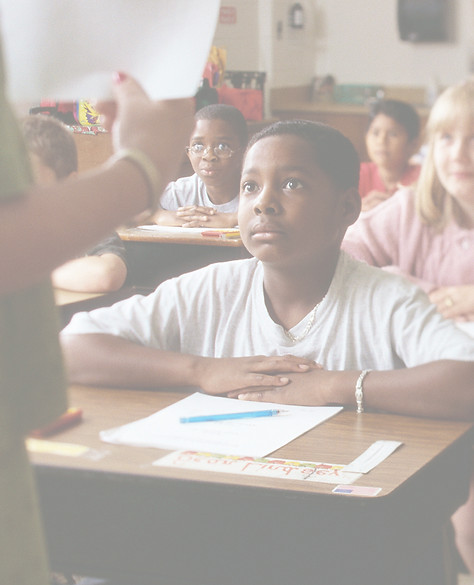
I will never forget when a first grade teacher once told me that the entire first grade curriculum in her school district consisted mostly of just teaching reading. Consider what more we could be teaching in elementary school instead, if every child knew how to read before even entering preschool. Just as learning a second language is more difficult when we are older, learning reading is more difficult at the elementary school age than it is when we are babies. Unfortunately, the elementary school level is when most children are taught to read, and we are currently in the midst of a literacy crisis when reading scores have been plummeting for years:
-
Only 31% of 4th graders are reading at the NAEP Proficient Level (National Assessment of Educational Progress 2024, Nation's Report Card).
-
40% of 4th graders and a third of 8th graders are reading below the NAEP Basic Level (National Assessment of Educational Progress 2024, Nation's Report Card).
-
Most students who start kindergarten in the lowest 20% of readiness exam scores stay in the bottom 20% of their class by fifth grade (The Children's Reading Foundation).

Baby-Age is the Ideal Time
Teaching reading at the elementary level can sometimes be a time-consuming and difficult process. But teaching babies requires different, simpler strategies. Superior reading skills can be achieved, and more easily, through the Word Immersion method – when it is done properly during the baby/toddler years. This enables a child to begin preschool with a reading skill that has exponentially more power than when reading is taught at age 6, even if elementary curriculum methods are successfully employed. Learning to read is natural and easy if it is taught during the baby/toddler years with Word Immersion.
Babies Learn Reading Like Learning a Second Language
When babies learn a second language through language immersion (spoken in their home environment), they become fluent in that language before entering school where they can later focus on the official grammar rules of that language. The same process can work for reading if you consider printed words as a second language. Through immersing babies in an environment of letters and words, and teaching them what they are, how they sound, and how they match to spoken words, children will become fluent readers long before they learn official phonics rules later in school.


Teaching Reading in School with Phonics
At the elementary school level, various methods have been used for teaching reading over the past several decades, and there has been some controversy regarding which method is best. Current methods are trending toward using more phonics concepts in teaching, in which students learn through orthographic mapping (knowing how a word sounds when spoken, and understanding its meaning and spelling). This involves teaching students how to sound out words they don't already know. After learning to sound out words over time, they develop a repertoire of words they have already learned and memorized, so they can then read them quickly without having to sound them out.
Complexities with Teaching Reading in School
Phonics may be the best method for the elementary school age level, as its success is supported by scientific research. Schools are beginning to turn to phonics, making necessary curriculum reforms. However, considerations need to be made regarding complexities such as:
-
Learning phonics tends to be difficult for students to grasp and master
-
Some teachers are reluctant to teach phonics, partly because they are unsure of its effectiveness or how to teach it, and partly because some view it as "boring" and "challenging" for their students
-
There are different ways this method can be implemented, and some may be more successful than others
-
Any reading teaching method that is too rigid may not always work well for every child.


Reading Early Enhances Later School Learning
Teaching babies to read using the Word Immersion method allows them merge seamlessly into literacy skills lessons (phonics, vocabulary, word pattern recognition, etc.), once they reach the elementary school age. The Word Immersion method works by giving them a large repertoire of sight words that they recognize instantly while they are still toddlers. Learning in this manner also gives them the ability to sound out words they don't know. As toddlers, they develop an implicit understanding that a word ending with "-ate" is pronounced with a long A versus a short A, before they even learn the official phonics rule about how vowels sound in words ending with E. Thus, by the time they start preschool, they can instantly read the many words they already know, and they are capable of figuring out the sounds of new words they don't know, based on their extensive, innate familiarity with how words sound with various spelling patterns. Then, when they are taught more formal reading mechanics in elementary school, the reading knowledge they already have becomes even richer. They can breeze through phonics lessons rather than struggling with them as many children do.
Reading Early Leads to a Cycle of Success
Generally, when children can read early, they are exposed to more information and gain more background knowledge. Toddlers who can read will likely notice written information they encounter in the world around them, and develop early interests from reading books, all of which can prompt them to ask questions and share thoughts they might not otherwise have conceived. Parents' or caregivers' answers to these questions can form enriching conversations that provide the groundwork for toddlers learning more concepts, developing broader and deeper background knowledge, and curating more advanced vocabulary at a younger age. This can lead to a cycle of learning interest and academic success. It can also cultivate a passion for continued reading as a hobby, which provides an enjoyable alternative to social media use and other forms of screen time as they get older.


Learning Reading is Effortless for Babies
Some educators believe that the ability to read is not a process that just emerges naturally, like learning to talk. However, I believe this may only be true for older children or adults. In fact, I have observed that learning to read is a natural process, similar to learning to talk, for babies and toddlers in Word Immersion environments. Just as babies learn to talk more effectively the more they are spoken to, babies will learn to read effectively if they are immersed in word/letter activities in the right way.
Babies Learn Best Through Play
Learning for babies and toddlers is more effective when:
-
It is done through guided play or learning games
-
The baby is interested (i.e., similar to the Montessori philosophy that when children choose their learning activities, they learn the material more effectively)
-
It is interactive (i.e., not a video they are passively watching)
-
Imagination is involved (e.g., storytelling or story-acting)
-
Learning activities are regularly repeated (e.g., reading the same book repeatedly).
When families teach reading to babies and toddlers at home, they have better literacy skills when they start school, and they often enjoy reading more. My Word Immersion method is effective because it is entirely based on caregiver-baby interactions and guided play according to the baby’s interests.

